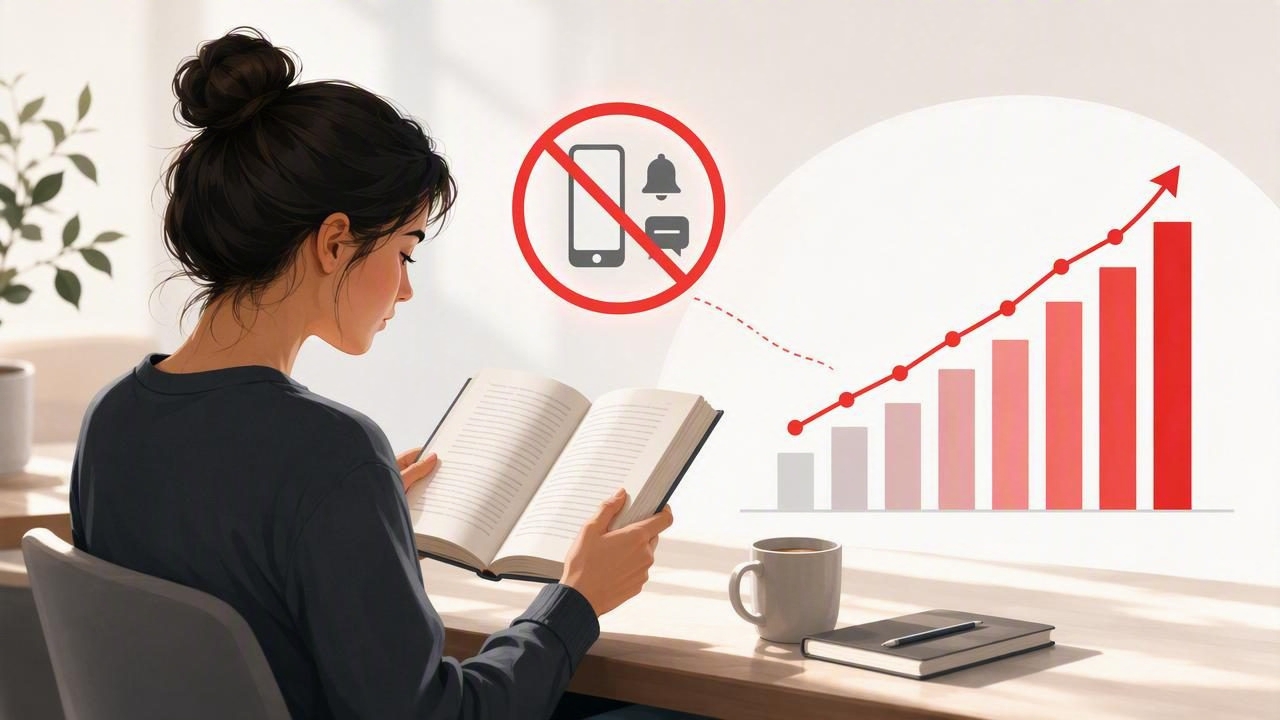
Improving reading speed is not just about reaching a bigger words-per-minute number once. The more useful goal is to compare reading speed over time with a distraction-free reader, identify what affects your pace, and build a reading routine that supports comprehension.
For students, professionals, and frequent readers, digital reading can be both convenient and distracting. Notifications, browser tabs, messages, visual clutter, and the temptation to switch apps can interrupt attention before you finish a page. A distraction-free reading environment makes it easier to measure your real reading performance instead of measuring how quickly you can read while constantly losing focus.
This guide explains how to track reading speed, choose meaningful benchmarks, protect comprehension, and use your results to improve your reading habits on an iPhone or iPad.
Why Track Reading Speed Over Time?
A single reading-speed test offers only a snapshot. Your result may be affected by sleep, stress, topic difficulty, vocabulary, screen brightness, or the number of interruptions you experience that day. Tracking your results over several sessions gives you a more reliable view of progress.
When you monitor your reading over weeks, you can answer practical questions such as:
- Do you read research articles faster than long news features?
- Does your pace change when you read in the morning versus late at night?
- Which reading mode helps you stay focused longest?
- Can you increase speed without lowering recall?
- Are you improving because of practice, or simply choosing easier material?
The point is not to race through every document. Instead, reading metrics can help you make better decisions about your study tools, work routines, and digital reading environment.
Start With the Right Reading Metrics
Words per minute, often shortened to WPM, is the most common speed-reading measurement. It is useful, but it should not be the only number you track. A fast pace means little if you cannot explain the main argument, remember key details, or apply what you read.
Use a combination of speed, time, and comprehension metrics for a more complete picture.
| Metric | What It Measures | Why It Matters |
|---|---|---|
| Words per minute | How many words you read in one minute | Shows changes in reading pace |
| Reading duration | Total time spent in a focused session | Reveals stamina and consistency |
| Completion rate | How much of the assigned text you finished | Helps you plan realistic reading blocks |
| Comprehension score | How well you recall or explain the material | Protects meaning as speed increases |
| Interruptions | Times you leave the text or lose focus | Highlights distraction patterns |
A useful formula for basic reading speed is:
Words per minute = Total words read ÷ Total minutes spent readingFor example, if you read a 1,200-word article in six minutes, your estimated rate is 200 WPM. If you paused twice to reply to messages, however, the result may not reflect your focused reading speed. This is one reason a distraction-free reader is valuable: it makes your timing more consistent.
Use Comparable Reading Material
To compare results accurately, avoid testing yourself with completely different types of text every time. A simple novel chapter, a technical policy report, and a scientific paper require different levels of attention. If your reading material changes dramatically, your WPM may change even when your underlying skill does not.
Create a small set of categories and compare similar sessions within each category. For example:
- Light reading: essays, newsletters, general-interest articles, and fiction
- Academic reading: textbook chapters, lecture notes, journal articles, and source material
- Professional reading: reports, project documentation, industry news, and proposals
- Dense reference reading: legal documents, technical manuals, or data-heavy material
Labeling sessions by category prevents misleading comparisons. You may read fiction at 320 WPM and a difficult technical document at 170 WPM. That difference is normal. The goal is to see whether your technical-reading pace improves over time while your understanding remains strong.
Build a Simple Baseline Before Changing Anything
Before experimenting with speed reading techniques, collect a baseline. Spend one week reading normally in a quiet, controlled setup. Use the same device when possible, choose material from similar categories, and record your results after every session.
Try this baseline process:
- Choose a text that is long enough for a 10- to 15-minute session.
- Read in a distraction-free mode with notifications muted.
- Record the word count, elapsed time, and estimated WPM.
- Write a two- or three-sentence summary without looking back.
- Rate your comprehension from 1 to 5.
- Repeat this process three to five times during the week.
At the end of the week, calculate your average WPM and average comprehension rating. This is your starting point, not a judgment of your ability.
A Sample Reading Log
| Date | Text Type | WPM | Focus Rating | Comprehension Rating |
|---|---|---|---|---|
| Monday | Industry article | 215 | 4/5 | 4/5 |
| Wednesday | Textbook chapter | 178 | 4/5 | 5/5 |
| Friday | Essay | 238 | 5/5 | 4/5 |
| Sunday | Industry article | 225 | 3/5 | 3/5 |
This log shows more than speed. The Sunday session may have been affected by fatigue or interruptions. Rather than treating 225 WPM as failure, use it as useful context for adjusting your routine.
How a Distraction-Free Reader Supports Better Comparisons
Digital reading is often interrupted by interface elements that have nothing to do with the text: ads, menus, social feeds, incoming alerts, and links that pull you into another task. A distraction-free reader reduces these competing signals so your attention stays on the words.
This improves reading-speed tracking in several ways:
- More consistent timing: You spend less time switching between apps or checking notifications.
- Fewer visual interruptions: Cleaner layouts reduce the urge to scan unrelated elements on the screen.
- Better focus data: Your WPM is more likely to represent actual reading rather than stop-start browsing.
- Repeatable settings: You can keep text size, background, brightness, and reading mode consistent between sessions.
Some readers also use pacing tools such as guided highlighting or rapid serial visual presentation (RSVP), where words appear in a fixed focal area. These modes can reduce unnecessary eye movement and help readers practice maintaining a steady pace. However, they should be introduced gradually. If a speed setting makes you anxious or harms recall, lower it.
Good reading progress is sustainable progress: a pace you can maintain while still understanding the material well enough to use it later.
Measure Comprehension, Not Just Speed
The biggest mistake in speed reading is treating faster reading as automatic improvement. Comprehension is the safeguard that keeps your training useful.
After each session, test yourself with one of these quick methods:
- Write the central idea in one sentence.
- List three facts, examples, or arguments you remember.
- Explain the text aloud as if teaching it to someone else.
- Create one question the text answered and one question it raised.
- For study material, answer a short quiz without reopening the source.
If your WPM rises by 20% but your ability to summarize drops sharply, slow down. You may need more time for dense sections, unfamiliar terms, or important evidence. Skilled readers vary their pace according to the purpose of the text.
Review Your Results Weekly, Not Obsessively
Checking every session is helpful; judging yourself after every session is not. Reading speed naturally fluctuates. Instead of chasing a new personal best each day, review your average results once a week.
Look for patterns such as:
- Your strongest reading times of day
- Text categories where your speed is steadily improving
- Settings that reduce eye strain or wandering attention
- Sessions where comprehension fell below your target
- Repeated distractions that can be removed from your environment
A practical target might be to improve average WPM by 5% to 10% over a month while keeping comprehension at four out of five or higher. Small, stable improvements are more valuable than a temporary speed spike followed by burnout.
Create a 20-Minute Reading Practice Routine
A short routine is easier to maintain than an ambitious plan you abandon after a few days. Use this 20-minute structure three to five times per week:
- Minutes 1-2: Set your goal. Decide whether you are reading for overview, study, research, or enjoyment.
- Minutes 3-15: Read in a focused, distraction-free environment. Keep the same display settings for comparable sessions.
- Minutes 16-18: Record time, word count, WPM, and focus rating.
- Minutes 19-20: Summarize what you read and rate comprehension.
As you become more comfortable, test modest changes one at a time. You might slightly increase pacing speed, change font size, use a different reading mode, or extend your session by five minutes. Change only one variable per week so you can tell what actually helped.
Make Your Reading Data Useful
The best reading data leads to better choices. If your records show that you read complex reports more effectively in the morning, schedule them then. If a larger font slows you slightly but improves comprehension and reduces fatigue, it may be the better setting. If a focused reading mode helps you finish articles without checking your phone, make it part of your default workflow.
Readers on iPhone and iPad can use a dedicated speed-reading tool to create a repeatable practice environment. For example, FocalRead can support focused digital reading sessions while you track pace and build stronger reading habits over time.
Ultimately, comparing reading speed over time is about more than reading faster. It is about learning how you focus, understanding what your material demands, and creating a dependable system for reading with purpose.