A daily reading habit can help you finish more books, keep up with articles, learn faster, and make better use of small pockets of time. But consistency is rarely about willpower alone. It comes from having a simple routine, choosing realistic reading sessions, and tracking progress without turning reading into a chore.
This guide shows you how to build a daily reading habit checklist with a WPM calculator. You will learn how to measure your current reading speed, set a sustainable goal, protect your focus, and review comprehension so that faster reading still supports learning.
Why a Daily Reading Habit Is Worth Building
Reading is one of the most flexible learning habits available. You can read a chapter before work, review a report during a commute, or study an article between classes. A consistent practice can improve your familiarity with complex topics, grow your vocabulary, and make it easier to concentrate for longer periods.
The key word is consistent. Reading for 15 minutes most days is often more useful than trying to force a three-hour session once a month. Small sessions lower resistance and give your brain repeated practice with attention, visual processing, and comprehension.
A reading-speed measurement adds another useful layer. It gives you a baseline and helps you see whether your reading process is becoming more efficient. However, words per minute should be treated as a guide, not a grade. The best pace depends on what you are reading and why you are reading it.
Start With a Clear Reading Purpose
Before selecting a daily target, decide what reading is meant to do for you. A student reviewing a textbook needs a different strategy than a professional scanning industry news or a recreational reader working through a novel.
- For learning: prioritize notes, recall, and the ability to explain key ideas.
- For work: prioritize identifying decisions, deadlines, evidence, and action items.
- For enjoyment: prioritize immersion and a pace that feels comfortable.
- For research: prioritize skimming structure first, then slowing down for relevant sections.
Your purpose determines your ideal pace. Reading a legal document at 500 WPM may not be useful if you miss an important condition. Reading a familiar news summary at a quicker pace, on the other hand, may be perfectly appropriate.
Use a WPM Calculator to Find Your Baseline
Words per minute, or WPM, measures how many words you read in one minute. You do not need an elaborate test to find a practical baseline. Choose a passage that matches the kind of material you usually read, set a timer, and read normally. Avoid trying to perform; the point is to capture your current habit.
Use this formula:
Words per minute = Total words read ÷ Minutes spent readingFor example, if you read 900 words in 5 minutes, your reading speed is:
900 ÷ 5 = 180 WPMIf your timer includes seconds, convert them into a fraction of a minute. For instance, 4 minutes and 30 seconds equals 4.5 minutes.
1,000 words ÷ 4.5 minutes = 222 WPMAfter the timing session, pause and summarize what you read in two or three sentences. If you cannot identify the main idea, the pace may have been too fast for that material. This brief comprehension check makes your WPM calculator more meaningful than a raw speed number.
A Simple WPM Tracking Table
| Reading Session | Words Read | Time | WPM | Comprehension Check |
|---|---|---|---|---|
| Monday article | 1,200 | 6 minutes | 200 | Summarized main point |
| Wednesday textbook | 900 | 6 minutes | 150 | Answered 3 review questions |
| Friday report | 1,050 | 5 minutes | 210 | Listed action items |
Notice that reading speed changes by content type. Dense academic writing, unfamiliar terminology, and technical instructions naturally require more time. Do not compare every session to a single universal number.
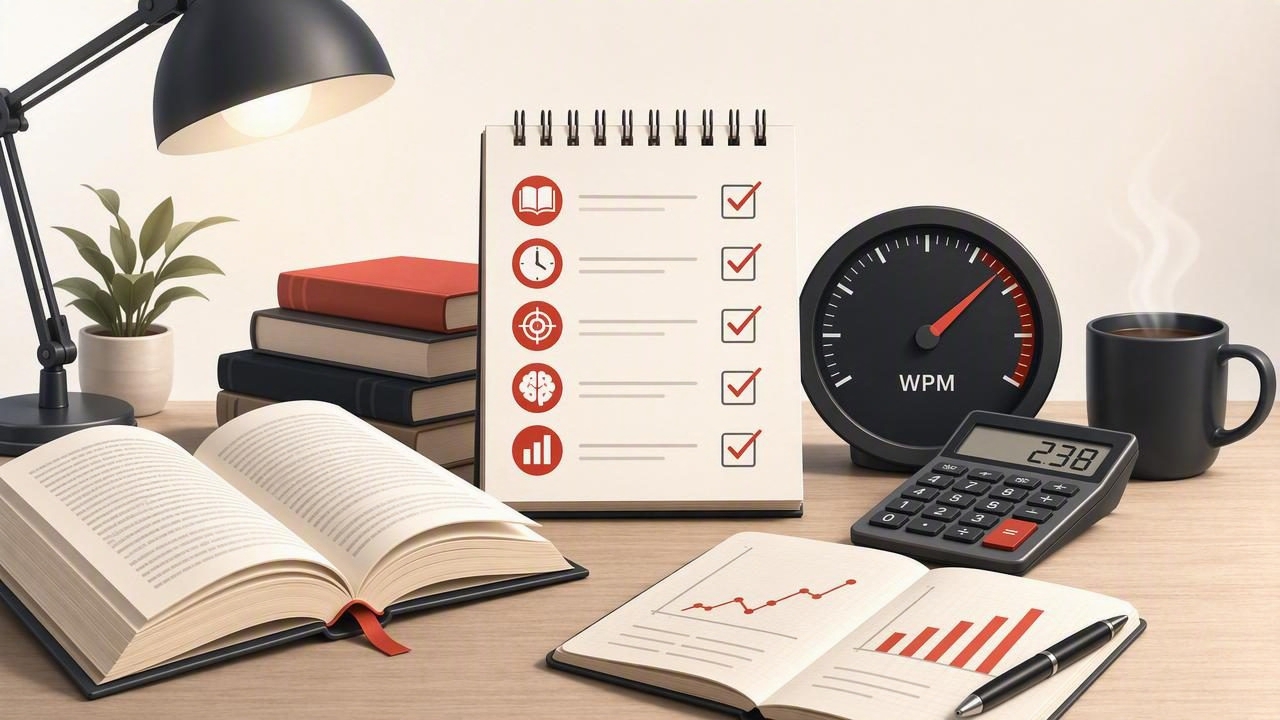
Your Daily Reading Habit Checklist
The following checklist is designed to be short enough to use every day. Save it in a notes app, print it, or adapt it to your calendar. The goal is to reduce the number of decisions you must make before reading.
- Choose one reading item. Select a chapter, article, document, or saved link before your reading session begins.
- Set a realistic time block. Start with 10 to 20 minutes. A small, repeatable commitment is better than an ambitious plan you avoid.
- Define the purpose. Ask: Am I reading to understand, study, find information, or relax?
- Remove one distraction. Silence notifications, put your phone in Focus mode, or close unrelated browser tabs.
- Preview the structure. Scan headings, bold terms, captions, and the introduction before reading line by line.
- Read at an intentional pace. Move smoothly, but slow down when an idea is unfamiliar or important.
- Record time and estimated words. Use your WPM calculator once or twice per week rather than obsessing over every session.
- Recall the main idea. Write one sentence about what you learned, decided, or enjoyed.
- Choose tomorrow's reading. End by selecting the next item so it is ready when your next session starts.
This checklist works because it creates a loop: prepare, focus, read, reflect, and prepare again. Each step supports the next day instead of leaving reading as an unfinished intention.
Set Goals That Support Comprehension
A useful goal includes both behavior and quality. “Read faster” is vague, while “read for 15 minutes on weekdays and summarize one idea” is measurable and connected to comprehension.
Try using a two-part weekly goal:
- Consistency goal: Complete five 15-minute reading sessions.
- Skill goal: Test your WPM on two familiar articles and maintain a short summary after each test.
As your routine becomes easier, adjust one variable at a time. You might add five minutes to a session, read a slightly more challenging text, or experiment with a faster pace during a low-stakes article. Changing everything at once makes it difficult to know what is helping.
Good reading speed is the fastest pace that still lets you accomplish your purpose.
How to Improve Reading Speed Without Rushing
Speed reading is not about racing through every sentence. It is about reducing avoidable friction while keeping attention on meaning. These methods can help you build efficiency gradually.
Preview Before You Read Closely
Spend 30 to 60 seconds examining the title, headings, first paragraph, conclusion, and visual elements. Previewing creates a mental map, so new details have somewhere to fit. It can be especially useful for online articles, reports, and textbook chapters.
Use Short Focused Intervals
Long sessions are not always better. A 15-minute interval with notifications off can produce more useful reading than an unfocused hour. If attention fades, take a brief break, look away from the screen, and return with a specific stopping point in mind.
Match the Reading Mode to the Material
Skimming works well when you need the overall argument or need to locate a specific section. Careful reading works better for instructions, unfamiliar concepts, and passages you need to remember. Many effective readers shift between the two modes within the same document.
Reduce Unnecessary Re-reading
It is normal to revisit difficult sentences. The goal is not to eliminate all regression; it is to avoid repeatedly losing your place because of interruptions or wandering attention. A clean reading environment, larger text, comfortable line spacing, and a clear session goal can reduce needless backtracking.
Review Your Habit Every Week
Once a week, spend five minutes reviewing your checklist. Look for patterns rather than judging individual days. Which time of day gave you the strongest focus? Which material slowed you down? Did your summaries become clearer? Did you avoid reading because the goal was too large?
Use your answers to make a small adjustment for the following week. For example:
- Move reading from late evening to an earlier lunch break.
- Replace a 30-minute target with two 15-minute sessions.
- Use easier material to rebuild momentum after a busy week.
- Slow down for technical reading and reserve speed practice for familiar articles.
Your WPM may rise over time, but consistency and recall are stronger signs that your reading habit is working. If you are reading regularly, remembering more, and finishing material that matters to you, the system is doing its job.
Make Digital Reading Easier on iPhone and iPad
Digital tools can make daily reading more convenient because your articles, documents, and notes are available wherever you are. On an iPhone or iPad, use text size settings that feel comfortable, reduce notification interruptions, and save reading material in advance. The fewer setup steps required, the more likely you are to follow through.
A focused reading app can also help structure timed sessions and speed practice. For readers who want a dedicated iOS option, FocalRead offers reading modes designed to support focus while working through digital text.
Build the Habit First, Then Build Speed
The most reliable path to better reading is not a dramatic overnight increase in WPM. It is a simple daily practice that fits your real schedule. Use a WPM calculator to understand your baseline, follow a short checklist to protect your focus, and always include a quick comprehension check.
Start with your next 10-minute session. Choose one piece of reading, set a timer, remove one distraction, and write down one takeaway when you finish. Repeating that small process is how a daily reading habit becomes automatic.