Most people do not struggle to read because they lack motivation. They struggle because reading practice is easy to postpone. A long article, a dense chapter, or an important work document can feel like a task that requires the perfect block of free time. As a result, reading becomes inconsistent—and inconsistent practice makes it difficult to improve speed, focus, or comprehension.
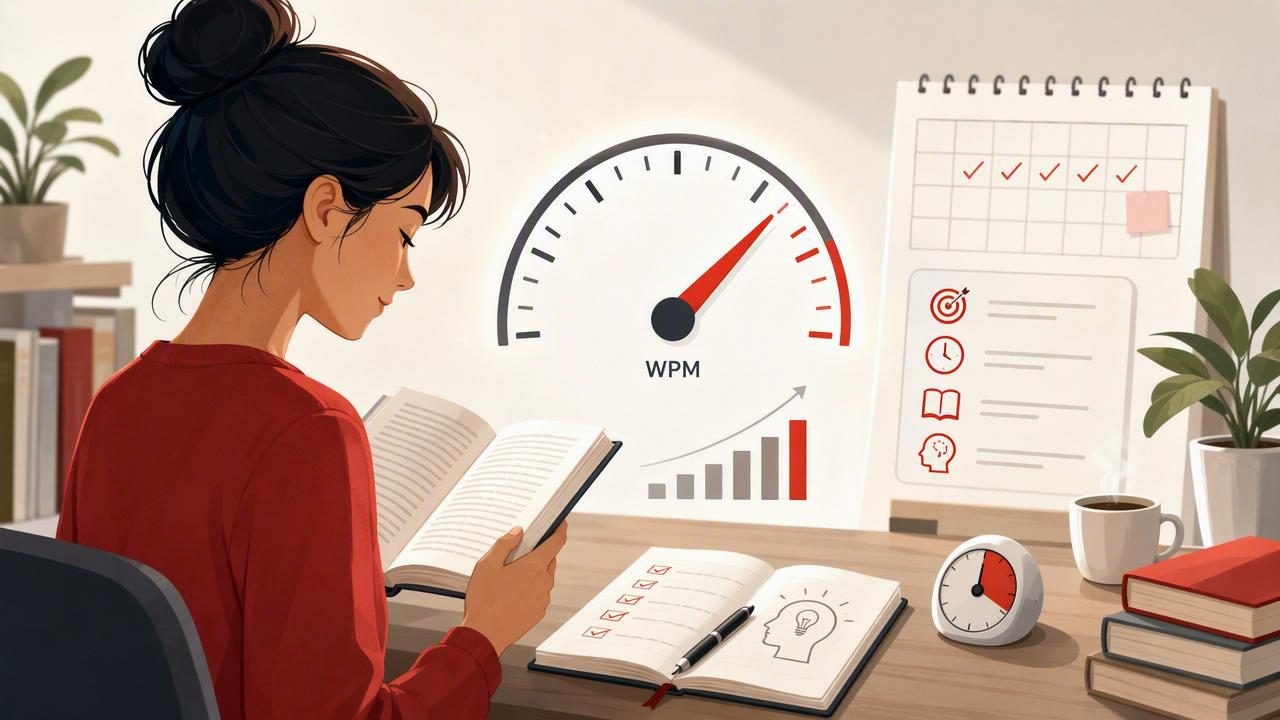
Learning how to get more consistent reading practice with a WPM calculator gives you a simple way to turn reading into a measurable habit. Rather than relying on vague intentions such as “read faster” or “read more,” you can track a clear metric: words per minute (WPM). Used correctly, a WPM calculator helps you set realistic goals, notice progress, and create short daily sessions that fit into a busy schedule.
The goal is not to race through every page. It is to build a sustainable reading routine that improves your pace while protecting understanding. This guide explains how to use WPM data, structure practice sessions, and stay consistent on an iPhone, iPad, or any digital reading device.
Why Consistency Matters More Than Occasional Long Sessions
A single two-hour reading sprint can feel productive, but it rarely creates a lasting habit. Reading speed and focus improve through repetition. Your eyes, attention, vocabulary recognition, and ability to follow ideas all benefit from regular exposure to text.
Short, frequent sessions are especially useful when you are training a reading skill. They reduce mental fatigue and make it easier to identify what is helping or hurting your performance. For example, if you read for 15 minutes each weekday, you can compare your pace and comprehension over time. If you only practice once every few weeks, one unusually difficult article may distort your results.
Consistency creates useful data. Useful data helps you make better adjustments to your reading habits.
A WPM calculator provides that data in a simple form. It gives you a starting point, a way to monitor your training, and a reminder that small improvements add up.
What Is a WPM Calculator?
A WPM calculator estimates your reading rate by dividing the number of words you read by the amount of time you spent reading. The basic formula is:
Words per minute = Total words read ÷ Total minutes spent readingFor instance, if you read a 1,500-word article in 10 minutes, your reading rate is:
1,500 ÷ 10 = 150 WPMThis number is a benchmark, not a judgment. Reading speed changes depending on the material. A familiar news article may be much faster to read than a research paper, legal agreement, textbook, or technical report. The value of a WPM calculator comes from comparing similar reading sessions over time.
Use WPM as a Trend, Not a Score
Do not assume that a higher number is always better. If you skim a complex chapter at 400 WPM but cannot explain the main idea afterward, that pace is not useful for study or professional learning. Instead, track WPM alongside a quick comprehension check.
| Reading Metric | What It Tells You | How to Use It |
|---|---|---|
| Words per minute | Your reading pace | Compare sessions with similar material |
| Minutes practiced | Your habit consistency | Aim for a realistic weekly total |
| Comprehension score | How much you retained | Use a short recall or quiz check |
| Distraction notes | What interrupted focus | Adjust your environment and settings |
Find Your Baseline Reading Speed
Before setting goals, establish a baseline. Choose a piece of writing that reflects the material you normally read. Students may use a textbook excerpt or academic article. Professionals can choose an industry report, email newsletter, or work-related document. Avid readers might choose an article or book passage in their preferred genre.
- Choose a passage between 500 and 1,000 words.
- Read it at your normal pace without intentionally speeding up.
- Time the session with a timer.
- Use the word count and time to calculate WPM.
- Write a two- or three-sentence summary without looking back.
Repeat this process on three separate days. Then calculate the average. This gives you a more reliable baseline than one session alone.
For example, imagine your results are 185 WPM, 205 WPM, and 195 WPM. Your baseline is approximately 195 WPM. Your first goal should not be to double that number immediately. A better initial target may be maintaining 195 WPM with stronger recall or increasing to 210 WPM on similar content.
Create a Reading Practice Plan You Can Actually Keep
The best reading plan is not the most ambitious one. It is the one you can repeat when your schedule gets busy. Begin with a minimum daily practice target that feels almost too easy. For many people, that means 10 to 20 minutes.
A Simple Weekly Structure
- Monday to Thursday: Complete one focused reading session of 10 to 20 minutes.
- Friday: Read at a comfortable pace and review your average WPM for the week.
- Weekend: Do one longer session or read purely for enjoyment without timing yourself.
This structure balances training with normal reading. Timed sessions build awareness of pace, while untimed sessions protect your enjoyment and help reading remain a meaningful part of your day.
It also helps to attach reading to an existing routine. Read after your morning coffee, during a commute, before lunch, or as part of your evening wind-down. A consistent cue removes the need to decide when to practice.
Use Small WPM Goals to Avoid Burnout
Large speed goals can create pressure, especially when comprehension matters. Instead of chasing a dramatic jump, use small milestones. A 5% to 10% increase over several weeks is meaningful progress when you can still remember what you read.
Try this goal-setting framework:
- Process goal: Practice reading for 15 minutes, five days per week.
- Pace goal: Improve average reading speed by 10 WPM over four weeks.
- Comprehension goal: Recall the main idea and three supporting points after each practice session.
Process goals are the most important because they are within your control. You may not improve your WPM every day, but you can show up for a short reading session. Over time, that repeated effort produces better results than irregular attempts to force speed.
Protect Comprehension While You Practice
Speed reading is only helpful when it supports your purpose. Reading for entertainment, studying for an exam, reviewing a contract, and scanning an inbox require different levels of attention. Before starting, ask yourself: What do I need to remember from this text?
Use a fast comprehension check after each timed session:
- State the central idea in one sentence.
- List two to three key details.
- Write one question you still have.
If you cannot complete this exercise, reduce your pace slightly next time. Slowing down is not failure; it is calibration. The most effective reading speed is the fastest pace that still gives you the understanding you need.
Reduce Friction on Your iPhone or iPad
Digital reading offers convenience, but notifications, cluttered webpages, and constant app switching can interrupt concentration. Make your reading environment easier to enter and harder to abandon.
- Turn on Focus mode or silence notifications during practice.
- Use reader view when available to remove ads and visual clutter.
- Increase text size enough to avoid eye strain, but not so much that each line contains only a few words.
- Keep one saved reading list for practice material.
- Use a timer so you know when the session is complete.
Many readers also benefit from reading modes that guide the eye through text in smaller chunks. Whether you use a traditional scrolling layout or a paced display, the key is reducing unnecessary eye movement and avoiding the urge to reread every phrase automatically.
Keep a Simple Reading Log
You do not need a complicated spreadsheet to make progress. A basic note on your phone can reveal patterns quickly. Record the date, text type, minutes read, WPM, and a short comprehension rating from one to five.
Date: Tuesday
Material: Marketing article
Time: 15 minutes
Word count: 3,000
WPM: 200
Comprehension: 4/5
Note: Lost focus after a notification
After two or three weeks, review the log. You may notice that you read faster in the morning, retain more on an iPad than an iPhone, or lose focus when reading in a noisy environment. These observations are more actionable than a single WPM score.
When to Change Your Reading Pace
Consistent practice does not mean using one speed for everything. Strong readers adjust pace based on difficulty and purpose. Scan quickly when looking for a date, name, statistic, or familiar update. Slow down for new concepts, arguments, instructions, and passages you need to quote or discuss later.
A practical approach is to divide material into three levels:
- Light reading: Familiar articles, updates, and casual reading. Practice a moderately faster pace.
- Learning reading: Textbooks, explainers, and reports. Maintain a steady pace and pause to summarize.
- Deep reading: Complex research, contracts, or difficult literature. Slow down, annotate, and reread selectively.
Your WPM calculator can help you see these differences without making you feel as though slower reading is unproductive. Different tasks deserve different speeds.
Build the Habit Before Chasing the Number
The most reliable answer to how to get more consistent reading practice with a WPM calculator is to make measurement simple and practice small. Establish a baseline, schedule short sessions, record trends, and check comprehension every time. Over weeks, your reading pace becomes easier to improve because reading itself has become automatic.
If you prefer practicing with focused digital reading tools, an app such as FocalRead can support structured sessions on iPhone and iPad. Whatever tool you choose, remember that the lasting advantage comes from returning to the text each day—with attention, a clear purpose, and a pace you can sustain.