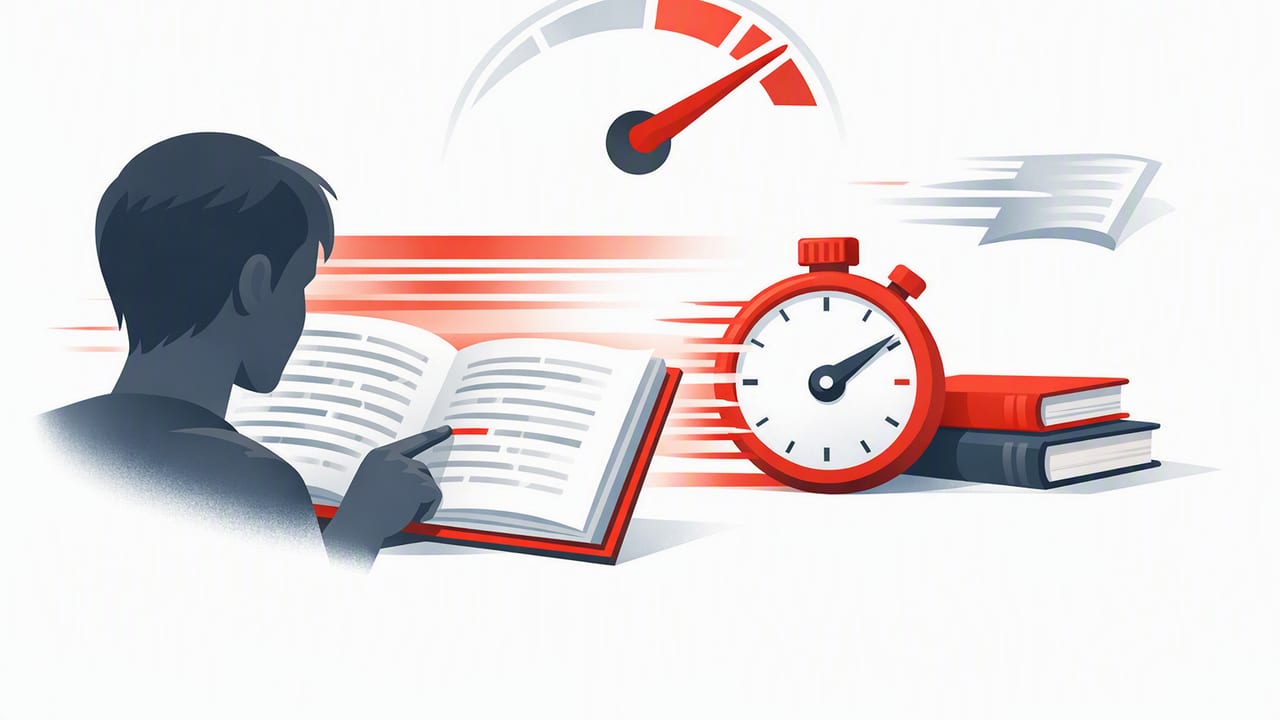
Speed reading isn’t just “reading faster.” The useful version of speed reading is a skill stack: you reduce wasted eye movement, increase focus, and keep comprehension stable by reading with intention. On iPhone and iPad, the challenge is different from paper: scrolling, notifications, small text, and multi-tasking can quietly destroy attention. The good news is that digital reading also gives you tools—adjustable typography, guided reading modes, and structured practice—that make speed gains more realistic than many people think.
This guide walks through evidence-aligned techniques you can use on iOS to read faster without turning everything into a blur. You’ll learn which tactics actually help, how to measure progress, and how to build a simple practice routine that sticks.
What speed reading really is (and what it isn’t)
Most frustration comes from a myth: that speed reading means skimming at extreme speed while remembering everything. In practice, effective speed reading looks like this:
- Higher words per minute (WPM) on easier text (email, reports, many articles).
- Flexible pacing—slower when ideas are dense, faster when content is familiar.
- Better attention control (less re-reading, fewer distractions).
- Comprehension checks that prevent “fast forgetting.”
It’s also worth naming what doesn’t work well for most readers: forcing extreme speeds on complex material (legal documents, technical papers) before you’ve built the underlying skills. That often produces the illusion of progress—your eyes move quickly, but your understanding collapses.
Rule of thumb: speed gains that keep comprehension within ~80–90% of baseline are usually sustainable. If you can’t explain what you read, you weren’t really reading—you were scanning.
Why iPhone & iPad reading can feel slower (and how to fix it)
Digital reading adds friction that looks like “slow reading” but is actually attention leakage. The most common culprits on iOS:
- Micro-distractions: notifications, badges, and “just checking” another app.
- Poor visual setup: small font, low contrast, cramped line spacing.
- Scrolling breaks rhythm: each scroll is a tiny context switch.
- Unstable pacing: skipping around, re-reading, or losing your place.
Before you even touch technique, make reading easier on the eyes and brain. A good baseline setup is: comfortable font size, generous line spacing, and a distraction-free environment (Focus mode, Do Not Disturb, or at least silencing notifications).
The three pillars of speed reading (that also protect comprehension)
1) Reduce regressions (unnecessary re-reading)
Many people believe they read slowly because they “think slowly.” More often, they read slowly because they re-read constantly—sometimes without noticing. Regressions happen when attention slips, when the line is hard to track, or when you’re trying to read too fast too soon.
Fix: use guided tracking (a finger, stylus, or on-screen highlight) and aim for smooth forward motion. You’re training your attention to stay with the text.
2) Widen your visual span (read in chunks)
Beginner readers often process text as single words. Faster readers process groups of words (chunks). Chunking reduces the number of “stops” your eyes make per line.
Practice: instead of “word-by-word,” aim for 2–4 words per fixation on familiar text. On iPad, the larger screen makes this easier; on iPhone, you can compensate by using slightly larger text and shorter line width (which reduces tracking errors).
3) Use variable pacing (not one speed for everything)
Comprehension stays high when you match speed to difficulty. If you try to read a dense paragraph at your “fastest speed,” you’ll either lose meaning or start re-reading, which cancels out the speed gain.
Practice: deliberately change pace:
- Fast: familiar topics, narrative, simple articles.
- Medium: work documents, thoughtful essays.
- Slow + notes: technical material, contracts, academic papers.
Speed reading techniques that work well on iOS
Different reading modes suit different goals. Here’s a practical comparison so you can pick the right tool for the job.
| Technique | How it works | Best for | Main risk |
|---|---|---|---|
| Guided highlighting | A moving highlight/marker leads your eyes through the text | Reducing regressions, staying focused | Over-reliance on the guide if never challenged |
| RSVP (one chunk at a time) | Words (or short phrases) appear sequentially at a set speed | Quick intake, short sessions, breaking phone-scrolling habits | Harder to scan structure; can reduce comprehension on complex text |
| Chunking with line control | Train yourself to read 2–4 words per fixation | General reading speed gains with good comprehension | Initial discomfort; needs consistent practice |
| Preview & structure scan | Read headings, first sentences, summaries before deep reading | Articles, reports, textbooks | Mistaking previewing for full understanding |
A simple way to measure speed reading progress (WPM + understanding)
You don’t need perfect measurement, but you do need consistent measurement. Use the same type of text each time (similar difficulty, similar length), and track two metrics:
- WPM (words per minute)
- Comprehension (can you summarize the key points accurately?)
Here’s a tiny snippet you can use to calculate WPM from a word count and elapsed seconds:
def wpm(words_read, seconds_elapsed):
    minutes = seconds_elapsed / 60
    return round(words_read / minutes)

print(wpm(850, 240))  # 850 words in 4 minutes => ~213 WPM
Comprehension check (fast and effective): after reading, write 3 bullet points from memory:
- The main claim or purpose
- 2–3 supporting ideas or facts
- Any action item or takeaway
If you can’t produce those bullets, reduce speed slightly or switch to a mode that supports structure (like standard scrolling with guided highlighting).
A 14-day speed reading practice plan (10 minutes/day)
Consistency beats intensity. Ten focused minutes a day is enough to change your default reading behavior on iPhone and iPad.
Days 1–3: Baseline + setup
- Measure baseline WPM on an easy article and a medium-difficulty document.
- Turn on Focus/Do Not Disturb during practice.
- Adjust font size and line spacing for comfort (avoid squinting).
Days 4–7: Regressions & tracking
- Read for 5 minutes using guided tracking (finger/stylus/on-screen guide).
- Read another 5 minutes without the guide, keeping the same smooth pace.
- End with a 3-bullet comprehension summary.
Days 8–11: Chunking practice
- Choose easy text.
- Set a slightly faster pace than comfortable.
- Try to “see” 2–3 words at once; don’t subvocalize every word.
Days 12–14: Variable pacing + real-world transfer
- Practice switching gears: preview headings, then read key sections slower.
- Use fast mode for familiar parts, slow mode for dense paragraphs.
- Track WPM and comprehension again and compare to baseline.
Tip: On iPad, split view can tempt multitasking. During speed reading practice, go full screen whenever possible to protect attention.
Common speed reading mistakes (especially on phones)
Trying to eliminate all subvocalization
Some internal speech is normal. The goal isn’t silence—it’s avoiding “one-word-at-a-time” narration. If your pace is stuck, try chunking and gentle acceleration rather than fighting your brain.
Using extreme speeds as a default
High speeds can work for light content, but comprehension often drops on complex text. Use variable pacing and treat very fast modes as a tool, not a lifestyle.
Measuring only WPM
WPM without comprehension is like “typing speed” without correct words. Always pair speed with a quick recall test.
Reading in a distraction-heavy environment
If notifications interrupt you, you’ll regress and re-read, which makes you slower. Protect your reading window with Focus mode and a clear goal for the session.
Making speed reading a sustainable reading habit
The best long-term strategy is to treat speed reading as selective acceleration:
- Speed up for volume: articles, newsletters, background research, meeting prep.
- Slow down for depth: hard chapters, big decisions, anything you’ll apply.
- Review what matters: a 60-second recap can double retention.
When you build the habit this way, your reading life becomes both faster and calmer: fewer endless scroll sessions, more intentional intake, and better memory for what you read.
Final thoughts
Effective speed reading on iPhone and iPad is less about “hacks” and more about training attention, chunking, and pacing—then using digital tools to reduce friction. If you want structured practice in an iOS-friendly format, apps that offer guided modes and drills (for example, FocalRead) can help you stay consistent without turning reading into a chore.